

Jockey Club Golf Argentina The Complete Guide to San Isidro
One of Argentina's defining private-club golf experiences: two Alister MacKenzie courses, more than ninety years of championship history and a round that belongs at the center of a serious Buenos Aires golf itinerary.
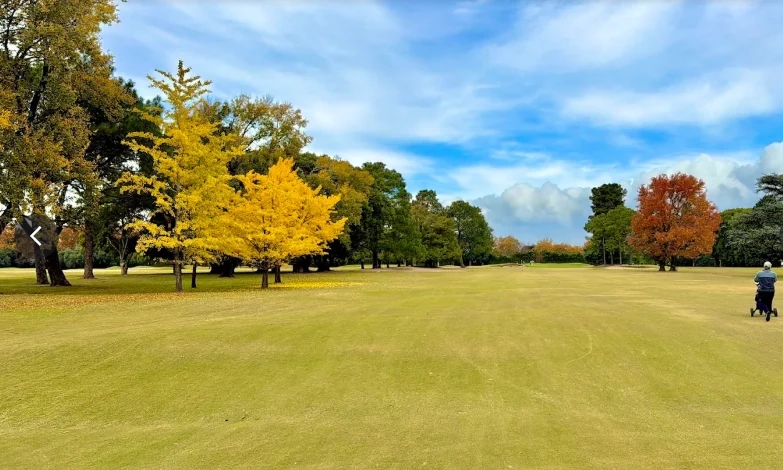
Jockey Club de San Isidro is one of the most historically important private golf clubs in Argentina. Located in San Isidro, north of central Buenos Aires, the club has two 18-hole courses — Azul (Blue) and Colorada (Red) — designed by Alister MacKenzie in 1930. For international golfers, it is one of the signature private-club rounds to include in a premium Buenos Aires golf trip.
If there is one course complex that explains why golf in Buenos Aires is different from a conventional resort destination, Jockey Club is it. The attraction is not simply a famous architect or a prestigious name. It is the combination of architecture, institutional history, member-club atmosphere and access that has to be organized properly before the traveler arrives.
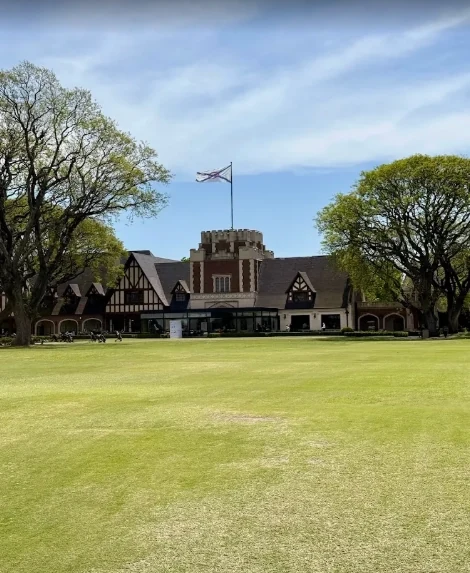
The official Jockey Club describes an approximately eighty-hectare golf property at Avenida Márquez 1702 in San Isidro, with two 18-hole courses. The Blue Course measures 6,378 yards and the Red Course 6,577 yards. The club also has a practice range and a substantial clubhouse overlooking the courses. But statistics alone do not explain why the experience matters. Jockey is the type of place where the context of the round — how you arrive, how the day is organized and how you fit into the rhythm of the club — is part of the value.
For golfers traveling from the United States, Canada, the United Kingdom or Europe, Jockey Club is particularly compelling because MacKenzie's work here predates Augusta National. The architecture belongs to the same design mind associated with Cypress Point, Royal Melbourne and Augusta, but it is expressed in a distinctly Argentine setting. The result is a golf experience that feels historically significant without becoming a museum piece.
36 holes
Two complete 18-hole courses: Azul and Colorada.
Alister MacKenzie
Both courses were designed by MacKenzie in 1930.
San Isidro
In the northern Buenos Aires corridor, within reach of the city.
Private access
Best organized in advance as part of a structured golf itinerary.
Why Jockey Club Is a Defining Argentina Golf Experience
Buenos Aires has a deeper private-club golf culture than many first-time visitors expect. Several strong courses sit around the metropolitan area, but Jockey Club occupies a distinct position because architecture, history and access all converge in the same place. It is not merely a prestigious name to add to a list. Played in the right context, it gives the traveler a clear sense of how golf developed inside Argentina's traditional club system.
A private club, not a golf resort
The atmosphere is fundamentally different from a destination resort designed around transient guests. Jockey Club exists first for its members. International visitors therefore enter an established rhythm rather than a hospitality product created for tourists. That distinction is precisely what many experienced golfers are looking for when they travel: the opportunity to see the local game from inside rather than through a standardized resort experience.
Architecture that serious golfers recognize
Alister MacKenzie's name immediately changes the level of interest for architecture-minded golfers. His best-known work is studied for strategic width, angles, deceptive scale, bold green complexes and the ability to challenge expert players without making the game impossible for higher handicaps. Those ideas are relevant at Jockey Club. The courses are not interesting simply because MacKenzie signed the plan; they remain compelling because the strategic concepts can still be felt during the round.
The round that gives context to Buenos Aires
A well-designed Buenos Aires golf itinerary uses contrast. Jockey Club provides heritage and architectural pedigree. Buenos Aires Golf Club adds a more modern championship identity. Olivos adds another historic private-club layer, while Pilar can bring operational flexibility. When Jockey is included near the beginning of the trip, the traveler immediately understands that Buenos Aires is not a one-course destination.
Alister MacKenzie in Argentina: Why the Design Matters
Jockey Club is one of the most important stops in Argentina for golfers interested in course architecture. In 1929, the club decided to incorporate golf into its sporting activities near the new racecourse at San Isidro. According to the Alister MacKenzie Society, the club sought advice from the United States Golf Association and ultimately engaged MacKenzie to create two 18-hole courses. He arrived in Buenos Aires in early 1930 and worked with construction specialist Luther Koontz.
That history matters because the Jockey project sits at a fascinating point in MacKenzie's career. It came before Augusta National opened and after he had already developed the strategic ideas that would make his work internationally influential. The MacKenzie Society notes that concepts seen at Jockey later echo in Augusta National, including comparisons between the 16th on the Red Course and Augusta's 8th, and between the 7th on the Blue and Augusta's famous 12th.
Strategy before punishment
The best MacKenzie courses do not depend on narrow fairways and repetitive hazards to create difficulty. Instead, they present choices. A generous-looking landing area may offer a weaker angle into the green. A more demanding line from the tee can create a better approach. Bunkers influence decisions even when they are not directly in play. Greens make position important long before the golfer reaches the putting surface.
This is one reason Jockey Club can be enjoyable for mixed-handicap groups. The architecture does not need to overwhelm the recreational player to remain interesting for the low handicapper. Stronger golfers see angles, preferred sides and strategic questions. Higher-handicap golfers can still move through the course without feeling that every hole is built only to punish imperfect shots.

Scottish references in Buenos Aires
The MacKenzie Society also documents architectural references to classic Scottish golf. The 10th green on the Red Course has been compared with the Road Hole concept at St Andrews, while the closing sequence includes a feature associated with the Old Course's Valley of Sin. These references should not be interpreted as literal copies. Their importance is that MacKenzie was translating strategic ideas from the game's oldest landscapes into a very different environment in Argentina.
For an international golf traveler, that gives the day another dimension. You can enjoy Jockey purely as a round of golf, but architecture enthusiasts can also read the property as part of MacKenzie's broader body of work. That is why the club belongs in the same conversation as Argentina's other great golf experiences even when those experiences are visually very different.
Jockey Club Red vs. Blue: Colorada and Azul
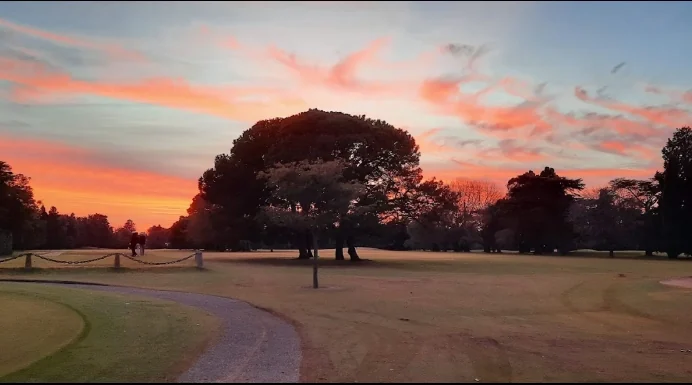
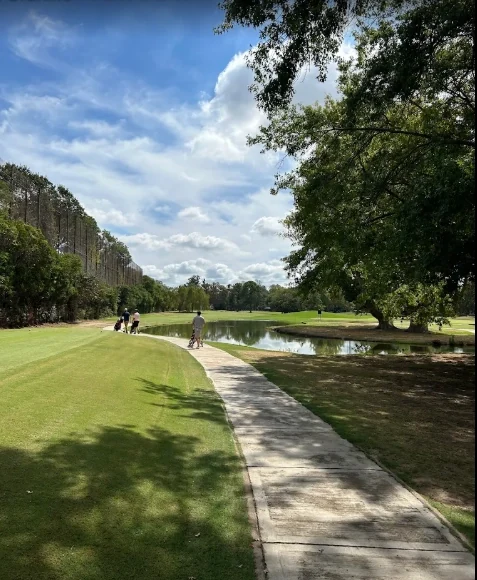
Jockey Club has two separate 18-hole courses. The club's official information lists the Azul Course at 6,378 yards and the Colorada Course at 6,577 yards. Their names came from the red and blue ribbons used to distinguish the two layouts during construction, colors that also connect with the club's identity.
The Colorada — Red Course
For many international golfers, the Red Course is the name most often associated with a first Jockey Club visit. It has hosted significant championship golf and carries a strong architectural reputation. The course rewards controlled positioning and thoughtful approaches rather than simple power. Its historical connections and tournament pedigree make it an obvious target for serious golfers building a premium Buenos Aires itinerary.
The Azul — Blue Course
The Blue Course should not be treated as an afterthought. It is another complete MacKenzie design and provides its own architectural interest. In fact, one of the strengths of the Jockey property is that a traveler is not visiting a club with a championship course plus a short secondary layout. The property contains two genuine 18-hole golf courses conceived as part of the same project.
Which course will you play?
The right answer for an international visitor is: the course that can be properly confirmed for the requested date and program. Private-club schedules, member activity, maintenance and event calendars can affect availability. Argentine Golf Agency therefore treats the routing as part of the access process rather than promising a specific course before it has been checked.
If the Red Course is the priority, tell us when requesting the itinerary. We structure the program around the preferred course whenever access allows, while keeping the wider Buenos Aires schedule flexible enough to protect the overall quality of the trip.
World Cups, Great Players and Argentine Golf History
Jockey Club's reputation is supported by tournament history, not simply by age. The club hosted the World Cup in 1962 and again in 1970. The United States team of Arnold Palmer and Sam Snead won in 1962, while Australia won in 1970 with Bruce Devlin and David Graham. Argentine legend Roberto De Vicenzo won the individual trophy on both occasions.
The list of prominent golfers connected with Jockey Club extends far beyond those events. The MacKenzie Society records visits by names including Bobby Jones, Henry Cotton, Peter Thomson, Seve Ballesteros, Tony Jacklin and Lee Trevino. Argentine Open winners at Jockey include major international players as well as Argentina's own champions.
This championship heritage changes the emotional experience of the round. Golf travelers are often drawn to courses where important moments occurred because the holes carry a story before the first tee shot is struck. At Jockey, that history is layered: MacKenzie design, Argentine private-club culture, World Cup golf and generations of national competition all occupy the same ground.
For travelers comparing the destination more broadly, read our guide to the best golf courses in Argentina. Jockey Club belongs on that list for reasons that are difficult to replicate elsewhere: two MacKenzie courses, a major championship record and an access model that preserves its private-club character.
Can Tourists Play Jockey Club in Argentina?
Yes, international visitors can play Jockey Club de San Isidro when access is arranged correctly in advance. What they should not expect is the normal resort model of choosing a date online, paying a public green fee and arriving with no additional coordination. Jockey is a private institution and the golf experience operates within that club environment.
The official club information states that members may play with invited guests on the golf courses from Tuesday through Friday. For the international traveler, that makes advance planning essential. The exact access mechanism, available date, requested course and conditions should all be confirmed before the itinerary is treated as final.
This is also why search queries such as “Jockey Club Argentina green fee” can be misleading. A public number does not tell the traveler whether they can actually secure the round. In private golf, availability and access are more important than the theoretical price of a green fee. A high-quality itinerary solves those issues before the client arrives.
Share travel window, group size, handicaps and hotel plans.
AGA evaluates the club schedule and the strongest date for Jockey.
Golf, private transfers and the rest of the Buenos Aires itinerary are coordinated together.
Your group arrives with the day's logistics and club details already organized.
Travelers who want a deeper explanation of the access model should also read Can Tourists Play Private Golf Clubs in Argentina?. That guide explains why many of the country's strongest golf experiences are not sold like normal visitor tee times.
Planning a Jockey Club Golf Day From Buenos Aires
Course access is only one piece of the experience. The other is execution. Most international guests stay in central Buenos Aires — commonly Recoleta, Palermo or Puerto Madero — while Jockey Club is in San Isidro, north of the city. Traffic can significantly affect travel time, especially around weekday peaks, so the day should be built with a realistic pickup window rather than a tight theoretical drive time.
Private transportation
For a premium group, private round-trip transportation is the cleanest solution. The vehicle collects the players at the hotel, allows enough buffer for traffic and keeps bags, personal items and timing under control. After the round, the group can return directly to the hotel or continue to dinner or another planned experience without needing to solve transport on the spot.
Dress code and club etiquette
Visitors should arrive prepared for a traditional private-club environment. Proper golf attire, golf shoes and conservative clubhouse presentation are the right baseline. Exact instructions should be confirmed before play, particularly if the club has event-specific or seasonal requirements. When a private club is part of a larger international itinerary, small details like this matter because they prevent unnecessary friction on arrival.
Walking, trolleys and on-course setup
Jockey Club should be approached as a traditional golf experience rather than assuming resort-style mobility. Trolley arrangements, caddie availability and any exceptional mobility requirements should be confirmed for the specific date. If a player has a medical or accessibility need, that should be disclosed while the itinerary is being designed so the operator can determine the most appropriate solution before confirmation.
Rental clubs and bags
Golfers traveling without their own clubs should request rentals in advance. For multi-region trips, bag logistics also deserve attention. A golfer combining Buenos Aires with Patagonia, Mendoza or Iguazú may not need the same equipment on every segment, and domestic aviation can make oversized luggage more complicated. AGA structures those movements around the complete trip rather than treating each golf day separately.
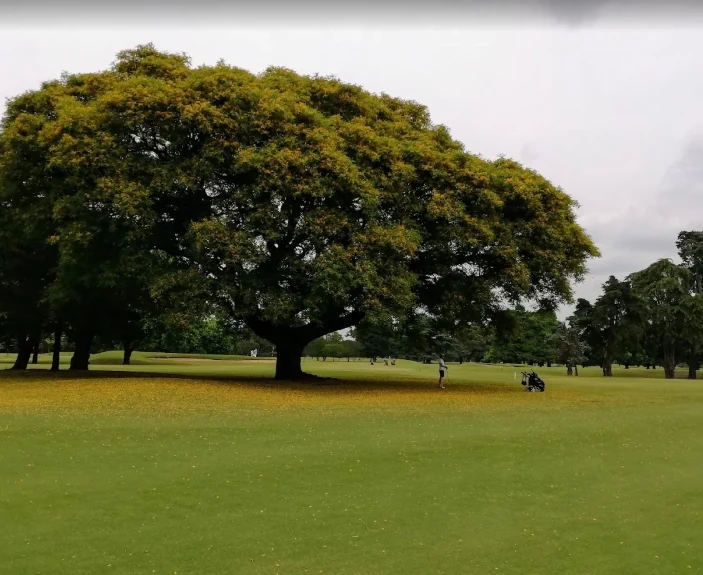
How Jockey Club Fits Into a Buenos Aires Golf Trip
Jockey Club is best used as an anchor round, not as an isolated trophy tee time. In a well-paced Buenos Aires itinerary, it establishes the traditional private-club side of the destination. The following rounds then create contrast through different architecture, conditioning, facilities and travel rhythm.
A 4- to 6-night Buenos Aires program
For golfers who want to stay entirely in Buenos Aires, Jockey can be paired with Buenos Aires Golf Club and another strong private course such as Olivos or Pilar. This gives the group three distinct golf experiences while keeping every night in the same hotel. It is an efficient option for buddy trips, couples and travelers who prefer not to add domestic flights.
Buenos Aires plus Patagonia
A longer Argentina golf trip can deliberately shift from private-club history to dramatic scenery. After Jockey and other Buenos Aires rounds, Patagonia introduces mountain golf at courses such as Llao Llao and Arelauquen. The contrast is powerful: classic Buenos Aires golf at the beginning, lakes and Andes landscapes later in the journey.
Buenos Aires plus Mendoza
Mendoza creates a different kind of contrast. Golf remains part of the trip, but wine, gastronomy and the Andes become equally important. This structure works especially well for couples or mixed groups where not everyone wants golf every day. Jockey provides the prestige round; Mendoza softens the pace with winery experiences and long lunches.
| Trip Style | Suggested Length | Role of Jockey Club | Natural Pairings |
|---|---|---|---|
| Buenos Aires Golf Escape | 4–6 nights | Signature heritage round | Buenos Aires GC, Olivos, Pilar |
| Buenos Aires + Patagonia | 9–12 nights | Private-club anchor before scenic golf | Llao Llao, Arelauquen |
| Buenos Aires + Mendoza | 8–11 nights | Prestige round before golf & wine | Mendoza golf, private wineries |
| Flagship Argentina Journey | 10–14 nights | Opening benchmark round | Buenos Aires + Patagonia + lifestyle |
Explore the full Buenos Aires golf program, our Flagship Argentina Journey, Golf in Patagonia and the Mendoza Golf & Wine Program to compare the strongest structures.
Jockey Club vs. Other Top Buenos Aires Golf Courses
There is no reason to reduce Buenos Aires to a single “best” course. The destination becomes more interesting when the strongest clubs are used for different purposes. Jockey Club is the architectural and heritage anchor. Other courses then complement it rather than compete with it.
Jockey Club vs. Buenos Aires Golf Club
Buenos Aires Golf Club has a more modern championship identity, with 27 holes and a visually dramatic water-driven design. Jockey is older, more traditional and architecturally connected to MacKenzie. Playing both gives a visitor an excellent contrast between classic strategic golf and a later championship style.
Jockey Club vs. Olivos Golf Club
Olivos Golf Club is another major private-club experience and an excellent complement for serious golfers. Both clubs carry strong history, but they present different routing, landscape and tournament character. For a premium three- or four-round Buenos Aires program, including both creates far more depth than simply adding easy-access resort golf.
Jockey Club vs. Pilar Golf
Pilar Golf can be especially useful for groups because it offers a large golf setting and flexible itinerary possibilities. Jockey has greater historical and architectural significance. One is not automatically “better” for every traveler; the right combination depends on group size, handicap range, mobility, dates and how many rounds the group wants to play.
Jockey Club vs. Patagonia golf
Courses such as Llao Llao and Arelauquen deliver scenery that Jockey is not trying to replicate. Jockey's value comes from private-club culture, MacKenzie architecture and history. Patagonia's value comes from the setting. Combining them is often more compelling than trying to choose between them.
The best Argentina golf trip is not a ranking exercise. It is a sequence: private-club heritage in Buenos Aires, architectural variety, and then the landscapes or wine experiences that make the country feel larger than a single golf destination.
Best Time to Play Jockey Club and Golf in Buenos Aires
Golf can be played in Buenos Aires during much of the year, but international travelers usually get the best overall balance in spring and fall. September through November offers pleasant spring temperatures, long days and an excellent rhythm for combining golf with restaurants and city activities. March through May is another strong window, with comfortable autumn conditions and less summer heat.
December through February can still work, particularly for travelers escaping northern-hemisphere winter, but warmer temperatures should be considered when scheduling tee times. June through August is cooler and can remain playable, although daylight, weather patterns and the wider Argentina itinerary may influence whether winter is the right choice.
September–November
Spring golf, pleasant city weather and a strong overall travel window.
March–May
Comfortable fall temperatures and excellent itinerary flexibility.
December–February
Playable, but warmer conditions make tee-time planning more important.
For a complete seasonal breakdown, see Best Time to Play Golf in Argentina. Travelers building a larger trip should also remember that the ideal month for Buenos Aires may need to be balanced with Patagonia weather, Mendoza harvest season or other regional priorities.
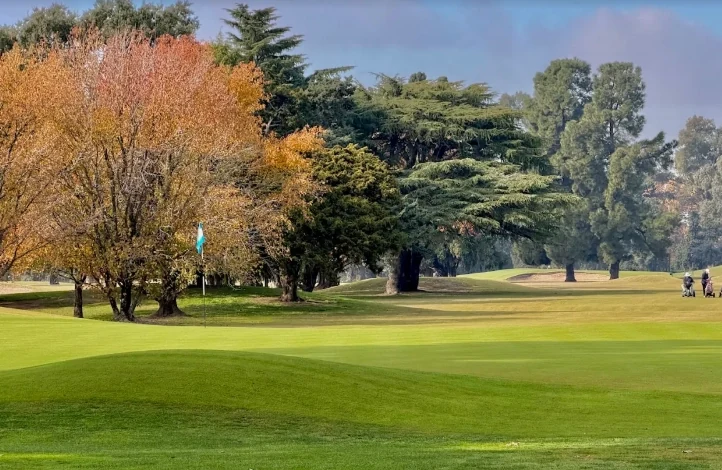
How to Book Jockey Club With Argentine Golf Agency
Argentine Golf Agency does not position Jockey Club as a commodity tee time. The objective is to build a complete private golf day around the club and, when appropriate, a complete Argentina golf itinerary around that day. This protects the experience because access, transport, hotel timing and the rest of the golf schedule are coordinated together.
Start by sending your travel dates or approximate window, number of golfers, handicap range and preferred hotel level. If the group has non-golfers, tell us that as well. Buenos Aires works very well for mixed groups because city experiences, gastronomy, shopping and culture can run parallel to the golf program without forcing everyone into the same schedule.
AGA then checks the best sequence for the requested dates. Jockey Club may become the anchor, with Buenos Aires Golf Club, Olivos or Pilar added around it. If the trip continues to Patagonia or Mendoza, domestic-flight days and bag logistics are built into the same plan. This is more reliable than collecting independent bookings and trying to make them fit afterward.
For travelers still comparing trip formats, useful planning resources include Argentina Golf Packages, Argentina Golf Itineraries: 7, 10 & 12 Days, Argentina Golf Trip Cost and Luxury Golf Trips in Argentina.
Jockey Club Golf Argentina: Frequently Asked Questions
Can tourists play Jockey Club de San Isidro?
Yes, but Jockey Club is a private club rather than a public tee-time facility. International visitors should arrange access in advance and confirm the exact date, course and logistics before traveling.
Who designed Jockey Club Golf Argentina?
Alister MacKenzie designed both 18-hole courses at Jockey Club de San Isidro in 1930. MacKenzie is also associated with Cypress Point, Royal Melbourne and Augusta National.
How many golf courses are at Jockey Club de San Isidro?
There are two full 18-hole courses, for 36 holes in total: the Azul or Blue Course and the Colorada or Red Course.
How long are the Jockey Club Red and Blue courses?
The club's official information lists the Azul Course at 6,378 yards and the Colorada Course at 6,577 yards.
Which Jockey Club course is better, Red or Blue?
Both are genuine MacKenzie designs. The Red Course is often a priority for international golf itineraries because of its reputation and championship history, but the best course for a visitor depends on access and the club schedule on the requested date.
Did Jockey Club host the Golf World Cup?
Yes. Jockey Club hosted the World Cup in 1962 and 1970. The United States won in 1962 and Australia won in 1970, while Argentina's Roberto De Vicenzo took the individual trophy on both occasions.
Where is Jockey Club Golf located?
The golf complex is at Avenida Márquez 1702 in San Isidro, in the northern Buenos Aires metropolitan area.
Is Jockey Club worth including in a first Argentina golf trip?
Yes. For golfers interested in architecture, private-club culture and Argentine golf history, Jockey Club is one of the strongest rounds to include in Buenos Aires.
Should I book Jockey Club as a standalone tee time?
For international travelers, the more reliable approach is to include Jockey Club inside a structured private golf program that handles confirmed access, private transportation, timing and complementary rounds.
What other courses should I play with Jockey Club?
Buenos Aires Golf Club, Olivos Golf Club and Pilar Golf are natural complements. Travelers extending beyond Buenos Aires can add Llao Llao and Arelauquen in Patagonia or a golf-and-wine program in Mendoza.
Build Your Buenos Aires Golf Trip Around Jockey Club
Tell us about your group and travel window. We will evaluate Jockey Club access and build the strongest private Buenos Aires or multi-region Argentina golf program around your dates.